The Rise of AI Competency Assessments in Hiring and Promotions


Featured on KBS News9
You've probably heard this before:
"The people who use AI well are the ones who work most effectively."
It's becoming increasingly true.
Some professionals can turn a report that once took half a day into a one-hour task. Others organize complex datasets with just a few well-crafted prompts.
But here's the real question: How do you know who those people are inside your organization?
More companies are beginning to answer that question with AI competency assessments.
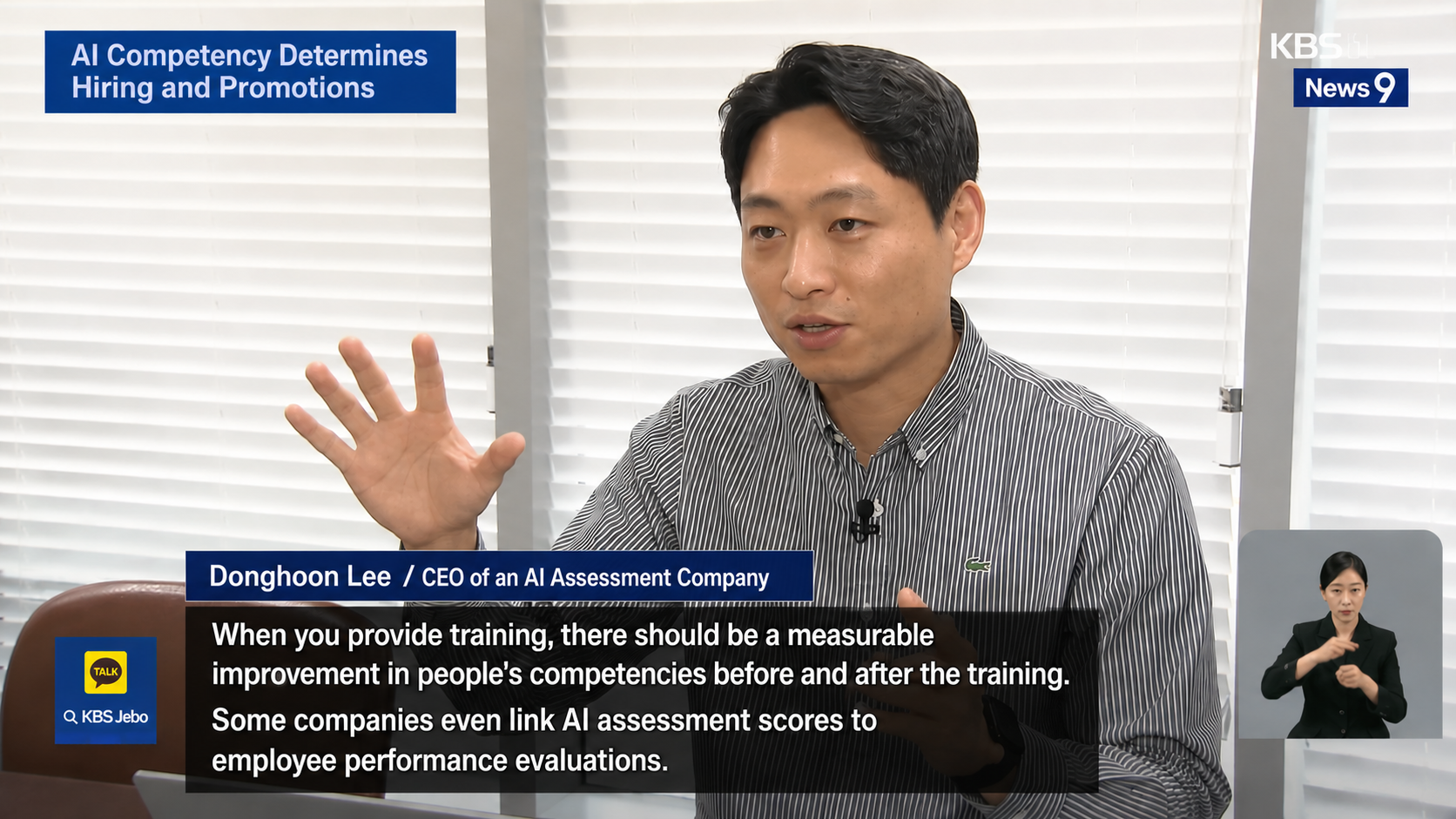
On June 1, KBS News9 featured a segment in its "The Future of Work" series titled "AI Exams Are Shaping Hiring and Promotions." The report explored how organizations are using AI assessments in real business settings and included an interview with Dong-hoon Lee, CEO of Codepresso, whose company develops AI competency assessments.
Since the broadcast aired, we've received inquiries from organizations asking:
"How can we evaluate AI competency in our company?"
Over the past few years, many organizations have invested heavily in AI adoption—rolling out AI tools, offering employee training, and sponsoring external courses. Yet relatively few have a reliable way to measure whether those investments have actually improved employees' ability to work with AI.
That's exactly why interest in AI competency assessment is growing.
If Training Doesn't Change Performance, It Isn't Training
Companies are increasingly listing AI proficiency as a preferred qualification in job postings, and some have already begun incorporating AI assessment results into promotion decisions.
What KBS covered wasn't a glimpse into the distant future; it reflected what's already happening today.
During the interview, Codepresso CEO Dong-hoon Lee explained the fundamental principle behind AI competency assessment:
"If you've invested in training, you should be able to measure how people's capabilities have improved afterward. Some companies have even started linking AI assessment scores to performance evaluations."
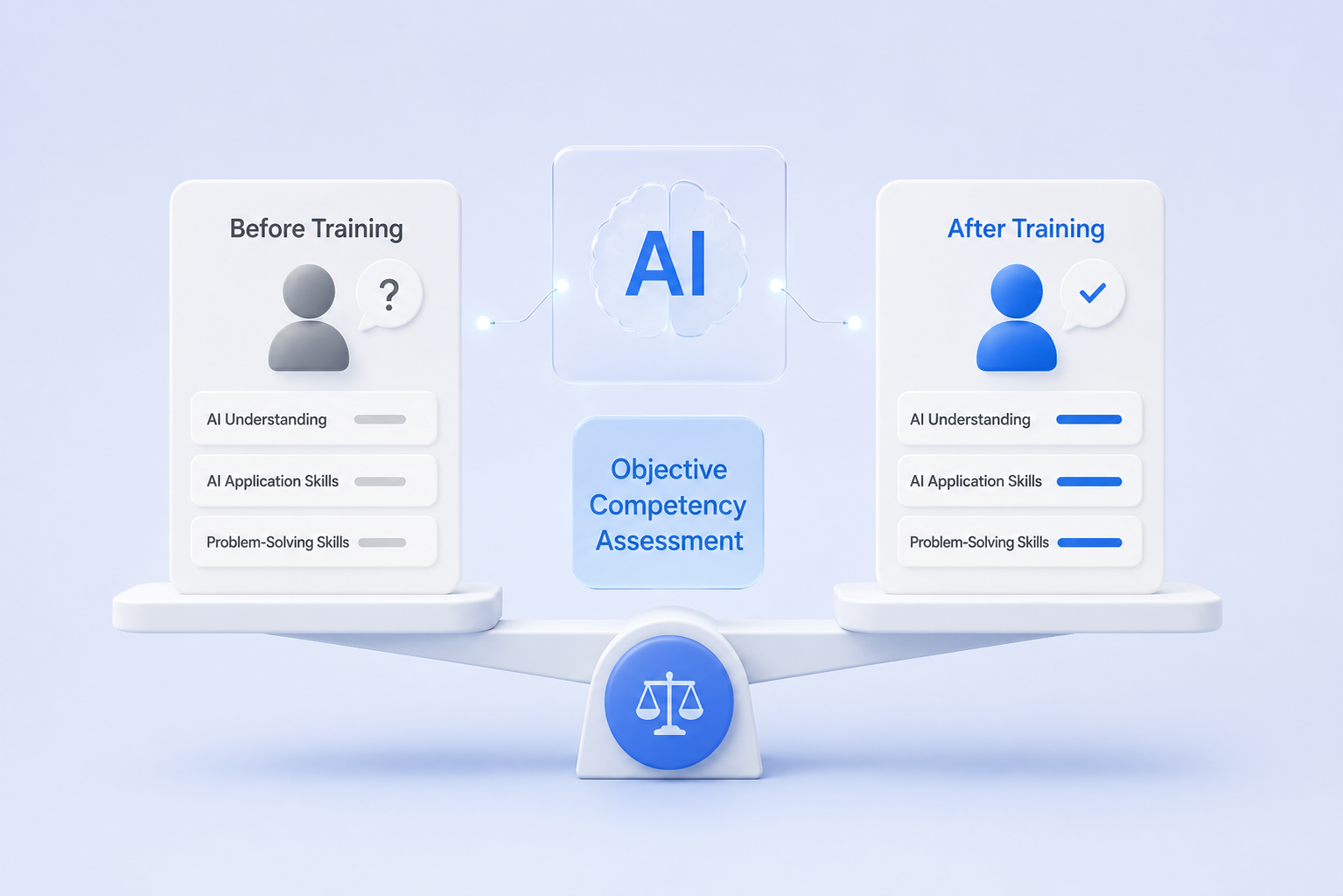
Simply knowing how to use an AI tool or passing a multiple-choice knowledge test, isn't enough to demonstrate real workplace capability.
The more important question is what should actually be measured?
Lee described AI competency as a broad set of practical skills:
"Assessments should evaluate the capabilities that matter in real work: from designing effective prompts that guide AI to complete business tasks, to designing and implementing AI agents that can automate workflows independently."
He also emphasized what AI transformation is really about:
"Giving someone a great sword doesn't make them a great swordsman. Likewise, successful AI transformation (AX) isn't about having the latest AI tools; it's about having people who know how to use them effectively."
Even the most advanced AI tools deliver little value if people don't know how to apply them.
From Hiring to Performance Reviews, Organizations Are Raising the Bar
One automotive software company featured in the broadcast officially introduced AI competency assessments into its hiring process last year.
The company now relies on AI to perform application stability testing, a repetitive task that previously took engineers several days but can now be completed by AI in about three hours.
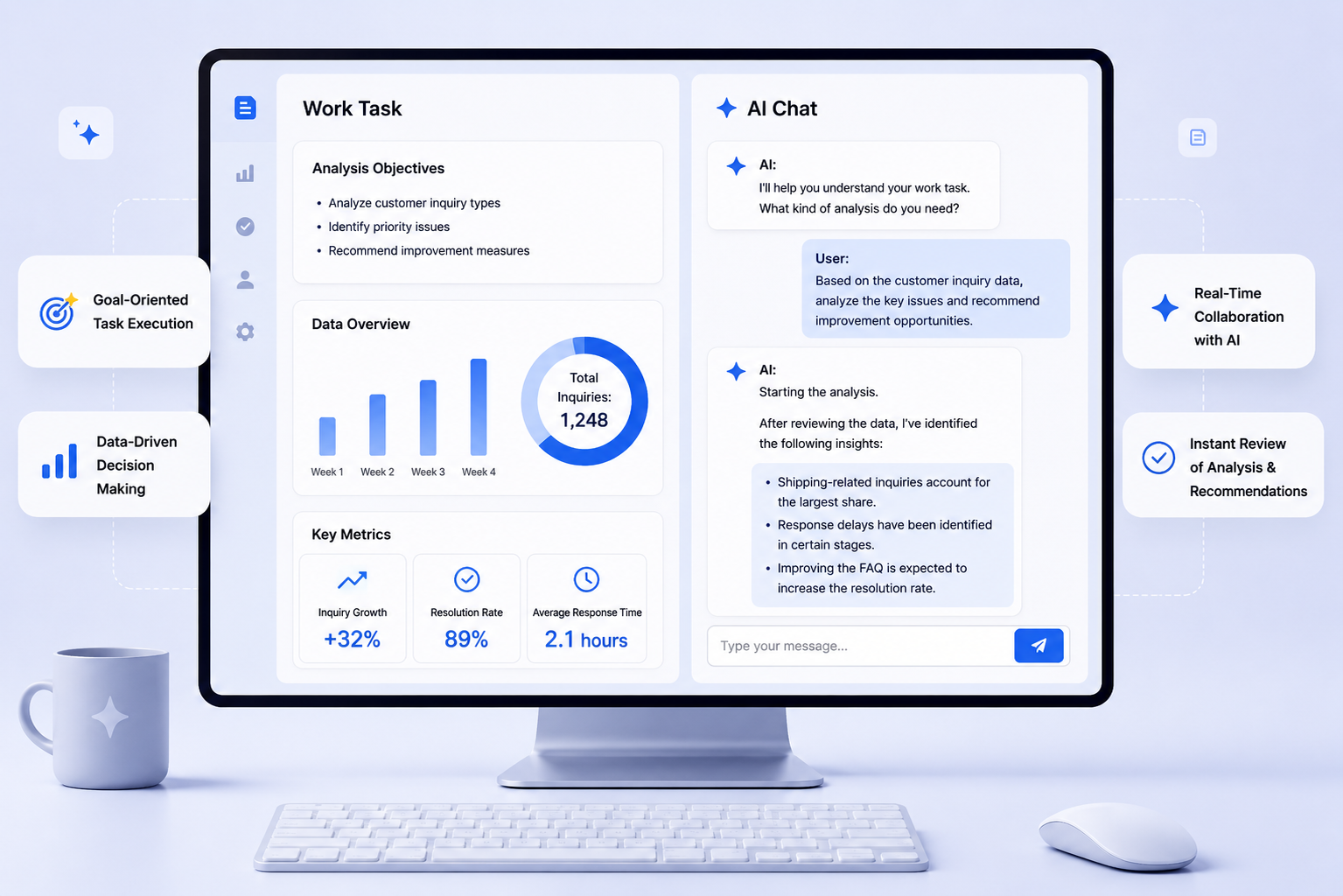
In this kind of environment, AI competency is no longer a nice-to-have; it's becoming a business necessity.
The shift extends beyond recruitment.
Some organizations are beginning to incorporate AI competency into promotion and performance evaluation systems. In the United States, job postings that explicitly prefer candidates with AI skills have increased sevenfold over the past two years, and Korean companies are rapidly moving in the same direction.
How Does Codepresso's AI Fluent Assessment Work?
AI training has become a standard investment for many organizations.
What has been missing is a practical way to determine whether that training actually improves employees' capabilities.
That's where AI Fluent, Codepresso's AI competency assessment solution, comes in.
Rather than relying on multiple-choice questions, AI Fluent evaluates participants through realistic, job-based tasks that closely resemble workplace scenarios.
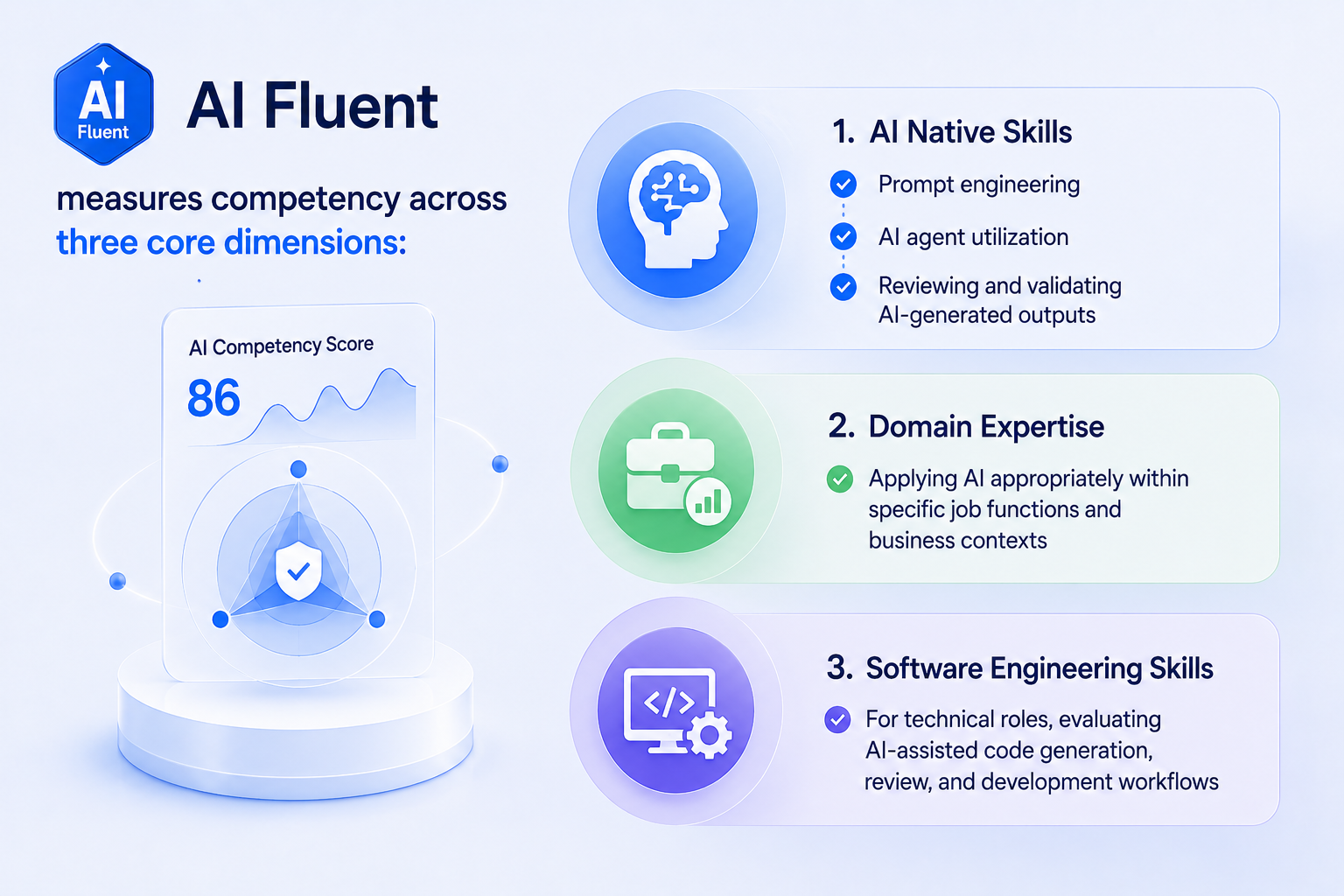
AI Fluent measures competency across three core dimensions:
AI Native Skills
- Prompt engineering
- AI agent utilization
- Reviewing and validating AI-generated outputs
Domain Expertise
- Applying AI appropriately within specific job functions and business contexts
Software Engineering Skills
- For technical roles, evaluating AI-assisted code generation, review, and development workflows
AI Fluent supports role-specific assessments for both technical and non-technical professionals—from business planners and product managers to software developers.
Organizations can measure competency before and after training, generate personalized skill reports, and gain organization-wide insights into AI readiness.
Instead of asking, "How AI-ready is our workforce?" organizations can answer the question with measurable data.
Whether you're looking to incorporate AI competency into hiring decisions or demonstrate the ROI of AI training to leadership, AI Fluent provides a practical starting point.
As AI becomes deeply embedded in everyday work, the way we evaluate workplace skills must evolve as well.
What isn't measured can't be improved.
The shift from assumptions to data-driven AI competency management has already begun.
Editor's Note
The morning after the KBS broadcast aired, the first message circulating around our office was simply:
"Hey, your CEO was on TV!" 😊
But what stayed with me most wasn't the television appearance.
It was the realization that using AI every day doesn't automatically mean you're good at using AI.
There's a much bigger gap between using AI and using AI effectively than most people realize.
Today, did you simply ask AI for an answer or did you clearly define its role, provide the right context, and guide it toward the outcome you wanted?