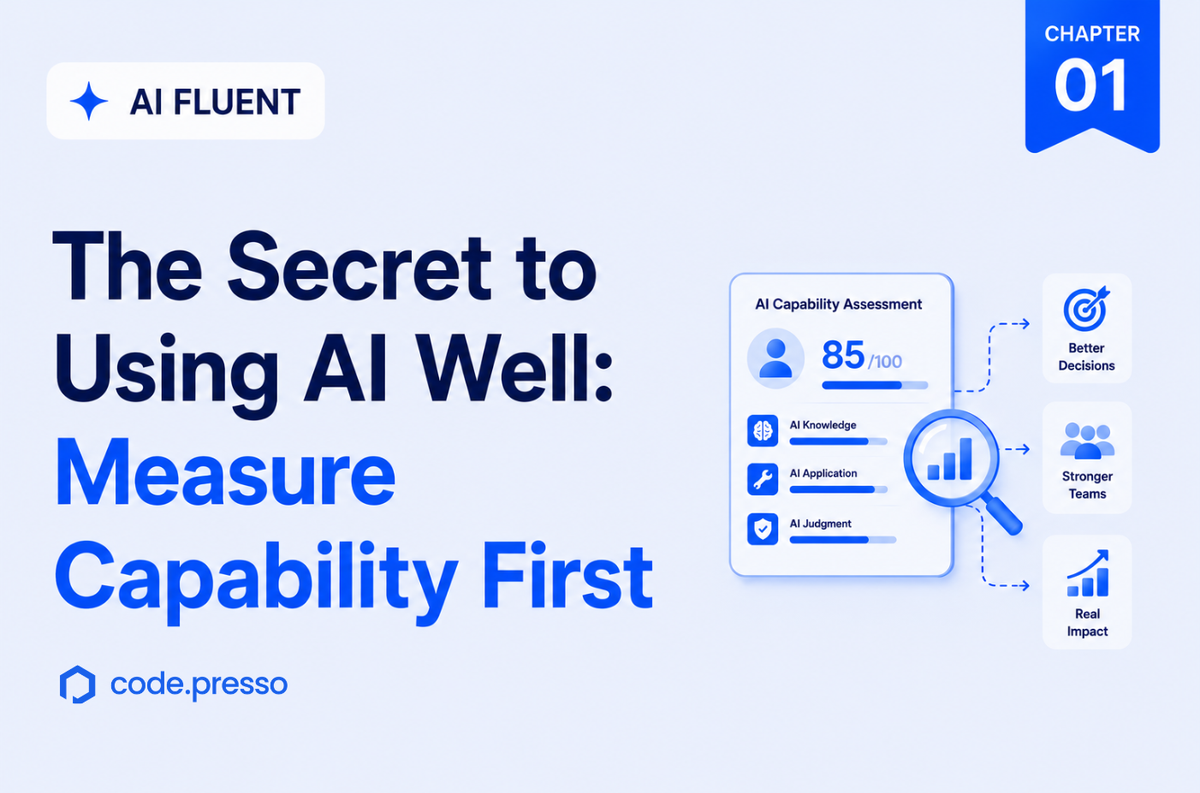
The Secret to Using AI Well: Measure Capability First

Many companies have already rolled out ChatGPT, Microsoft Copilot, or internal AI tools. Employees are using them. But overtime has not gone down. Productivity has not meaningfully improved. Workflows still look the same.
So what is going wrong?
In many organizations, employees use generative AI mostly for basic support tasks such as translation, summarization, or quick drafting. But very few teams are using AI to redesign workflows, improve decision-making, or solve more complex business problems.
The issue is not the tool.
The issue is that employees are using AI, but not using it well.
The same AI tool can produce very different results depending on how people use it. That is why one of the biggest barriers to AI transformation(AX) is not technology or budget. It is the gap in AI capability across the organization.
Why AI Adoption Does Not Always Lead to Results
1. Employees use AI, but only at a surface level
Ask employees, “Do you use AI?” and many will say yes.
But in practice, AI use often looks like this:
Copy text into ChatGPT → get an answer → copy the result back.
That may save a few minutes, but it rarely changes how work gets done.
Real productivity gains come when teams use AI to rethink workflows, support complex decisions, automate repetitive steps, and improve the quality of output.
Many organizations have adopted AI tools, but they have not yet built the capability to use them deeply.
2. Overtrust or Suspicious AI
Some employees submit AI-generated work without checking it.
Others say, “AI is unreliable,” and go back to doing everything manually.
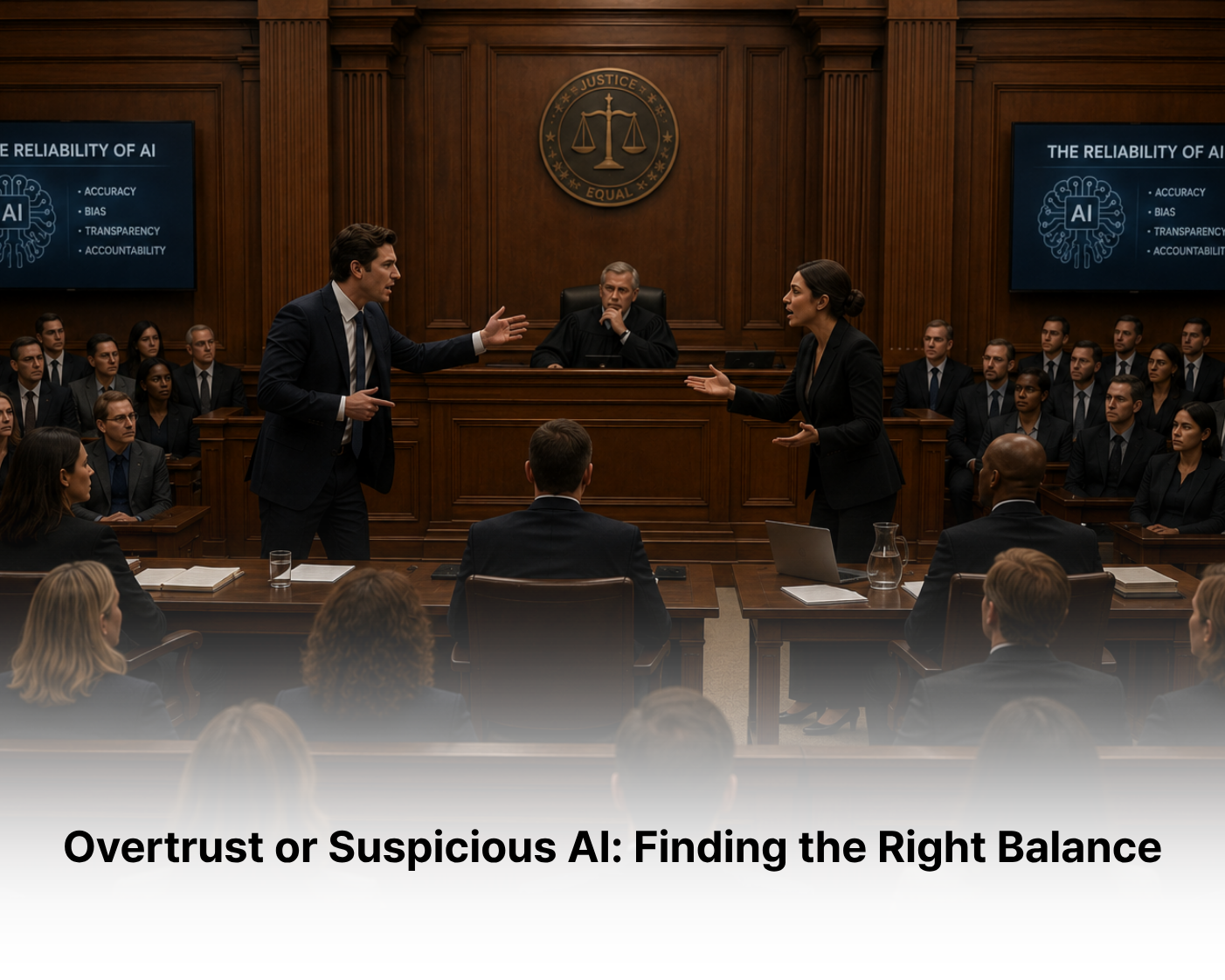
Both extremes create the same problem: no real productivity gain. This usually happens because employees do not understand what AI can and cannot do. Without clear judgment, AI becomes either a risky shortcut or a tool people avoid.
To use AI effectively, employees need to know when to rely on it, when to verify its output, and when human judgment is essential.
3. AI capability varies widely across teams
In one department, AI cuts work time in half. In another, employees continue working the same way they always have. Over time, this creates a widening performance gap.
Some teams become “AI-powered,” while others simply add AI on top of old workflows. This uneven adoption can limit collaboration, slow transformation, and create internal frustration.
For AI to create organization-wide impact, companies need visibility into which teams are ready, which teams are falling behind, and where support is needed most.
The Solution: AI Capability Assessment
An AI capability assessment measures how well employees understand, evaluate, and apply AI in their actual work. It is not about asking, “Have you used AI before?”
It is about measuring whether employees can use AI effectively, responsibly, and in ways that improve business outcomes.
From a business perspective, AI capability can be assessed across four key areas:
The results create an AI maturity map for the organization.
Leaders can see which departments are ready to scale AI, which roles need targeted training, and where capability gaps may slow down transformation.