From AI Literacy to AI-Native Organizations
Throughout the webinar, participants actively engaged with our speakers through thoughtful questions about AI adoption, AI literacy, organizational transformation, and the future of education.

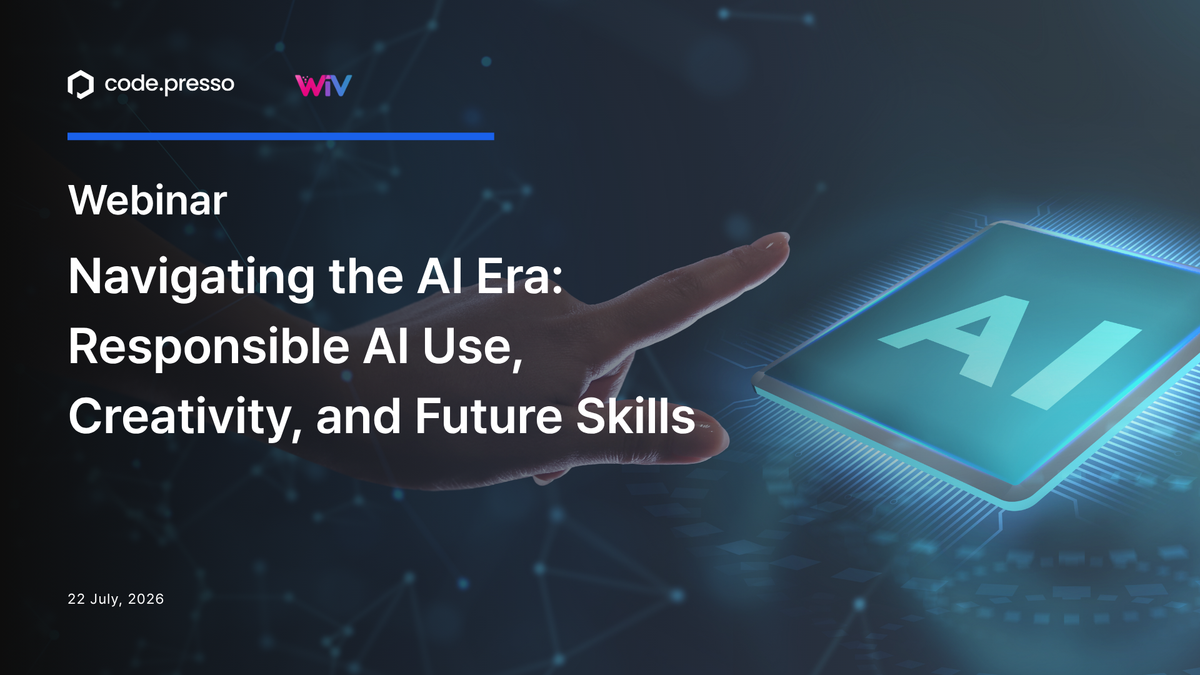
AI Webinar Wrap-Up _ Key Insights from Global Experts
How can organizations, educators, and professionals thrive in the AI era? Our recent global webinar brought together experts from Korea, Luxembourg, and Vietnam to answer exactly that question.
On July 22, 2026, Codepresso and Women in Vibe Coding successfully hosted the global webinar "Navigating the AI Era: Responsible AI Use, Creativity, and Future Skills."
The session welcomed participants from around the world, including educators, business leaders, HR professionals, software developers, students, and AI enthusiasts. Throughout the webinar, participants actively engaged with our speakers through thoughtful questions about AI adoption, AI literacy, organizational transformation, and the future of education.
One thing became very clear:
The AI era is no longer about simply learning how to use AI tools. It is about learning how humans and AI can create greater value together.
Three Perspectives on the Future of AI
Rather than focusing only on technology, our speakers approached AI from three complementary perspectives:
- Organizations: How can companies build AI-ready cultures?
- Education: How should universities prepare students for an AI-first world?
- Leadership: How do humans and AI agents collaborate effectively?
Together, these perspectives painted a practical roadmap for navigating AI transformation.
1. AI Success Begins with Organizational AI Literacy
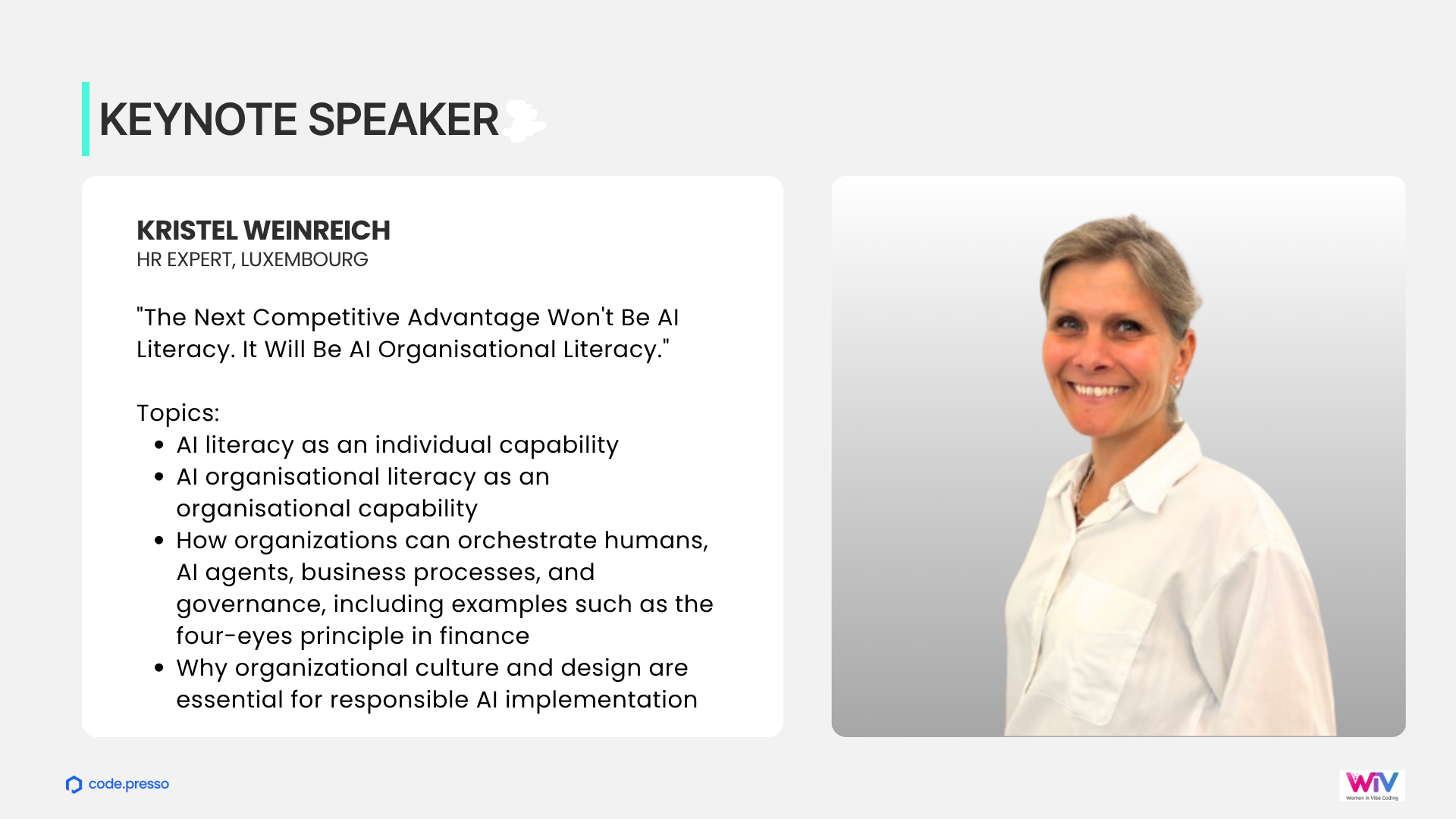
Speaker: Kristel Weinreich _ HR Expert, Luxembourg
Kristel challenged one of today's most common assumptions:
The next competitive advantage is not individual AI literacy, it is organizational AI literacy.
While many organizations invest heavily in AI tools, true transformation requires much more than technology.
Kristel explained that successful AI adoption depends on creating the right organizational culture, supported by leadership, governance, clear processes, and continuous learning. She emphasized that organizations should view AI as a capability that strengthens people, not as a replacement for them.
She also highlighted how human strengths and AI strengths complement each other.
Humans contribute: Purpose, Judgment, Ethics, Creativity, Context, Accountability
AI contributes: Speed, Scale, Pattern recognition, Automation, Data analysis, Knowledge retrieval
The goal is not to replace one with the other, but to combine both effectively.
One message especially resonated with participants:
AI literacy also means knowing when not to use AI. Organizations succeed when people understand the purpose behind AI adoption and continue to keep accountability in human hands.
2. AI Should Be Your Teammate, Not Your Shortcut
Speaker: Assoc. Prof. Thanh Tho Quan _ Dean, Faculty of Computer Science and Engineering, Ho Chi Minh City University of Technology (HCMUT)
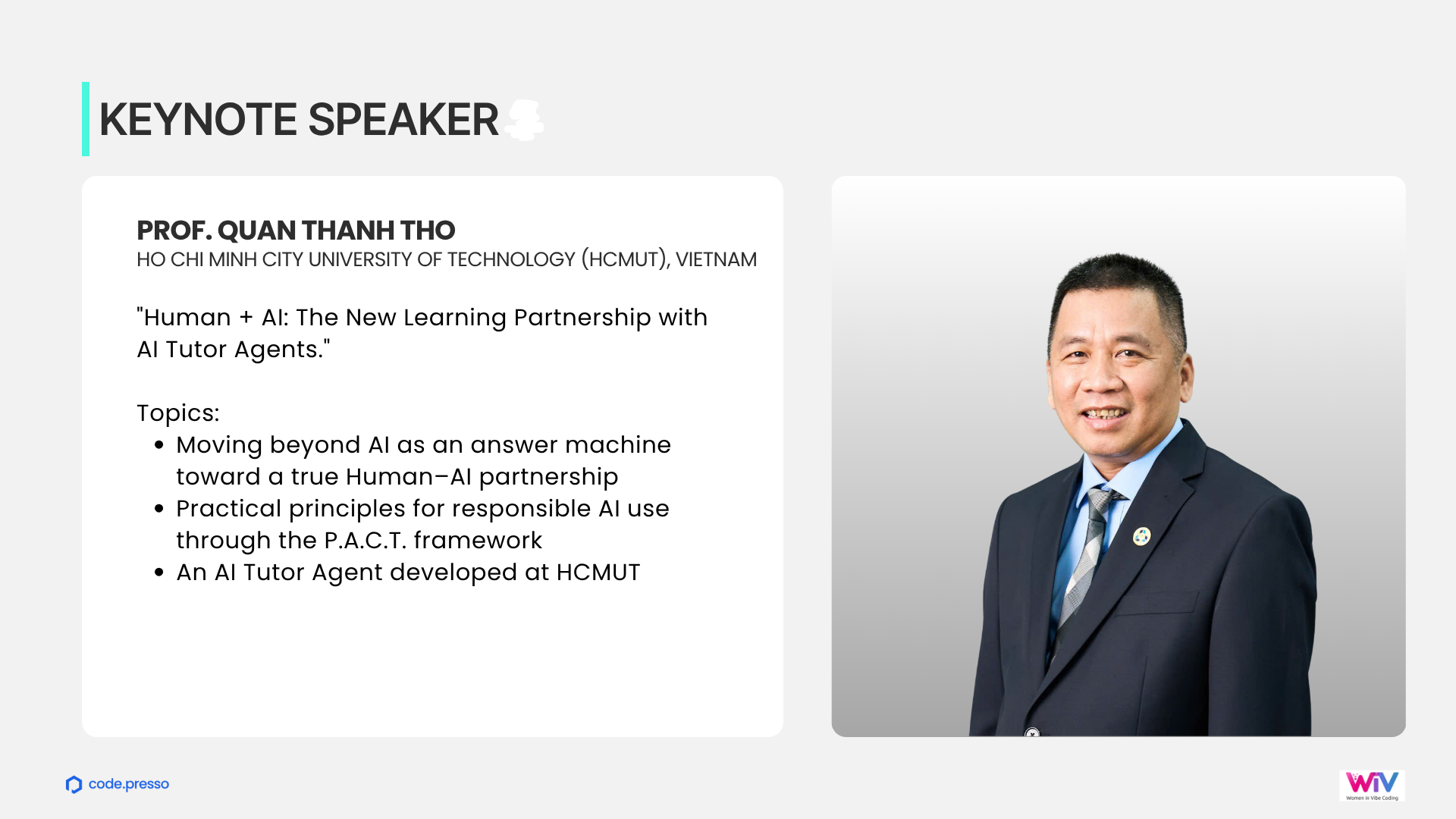
Professor Tho focused on one of today's biggest educational challenges.
As AI becomes increasingly capable, many users risk outsourcing their thinking to AI instead of learning with it. He described this as the transition from an era of information shortage to one of attention and judgment shortage.
Instead of asking students to avoid AI, educators should teach them to collaborate with it.
According to Professor Tho, the new essential skills are:
- Asking better questions
- Verifying AI outputs
- Thinking alongside AI instead of accepting answers blindly
His central message was simple: AI is a teammate, not a shortcut.
To support responsible AI use, he introduced the PACT Framework:
- Protect sensitive information
- Assess AI outputs critically
- Credit AI contributions appropriately
- Think before accepting AI-generated responses
AI outputs should be treated as drafts, hypotheses, or coaching—not unquestionable truth.
He also shared HCMUT's experience developing AI tutor agents that personalize learning while encouraging deeper understanding rather than passive answer consumption.
3. Moving from Organizations That Use AI to Organizations Where AI Works
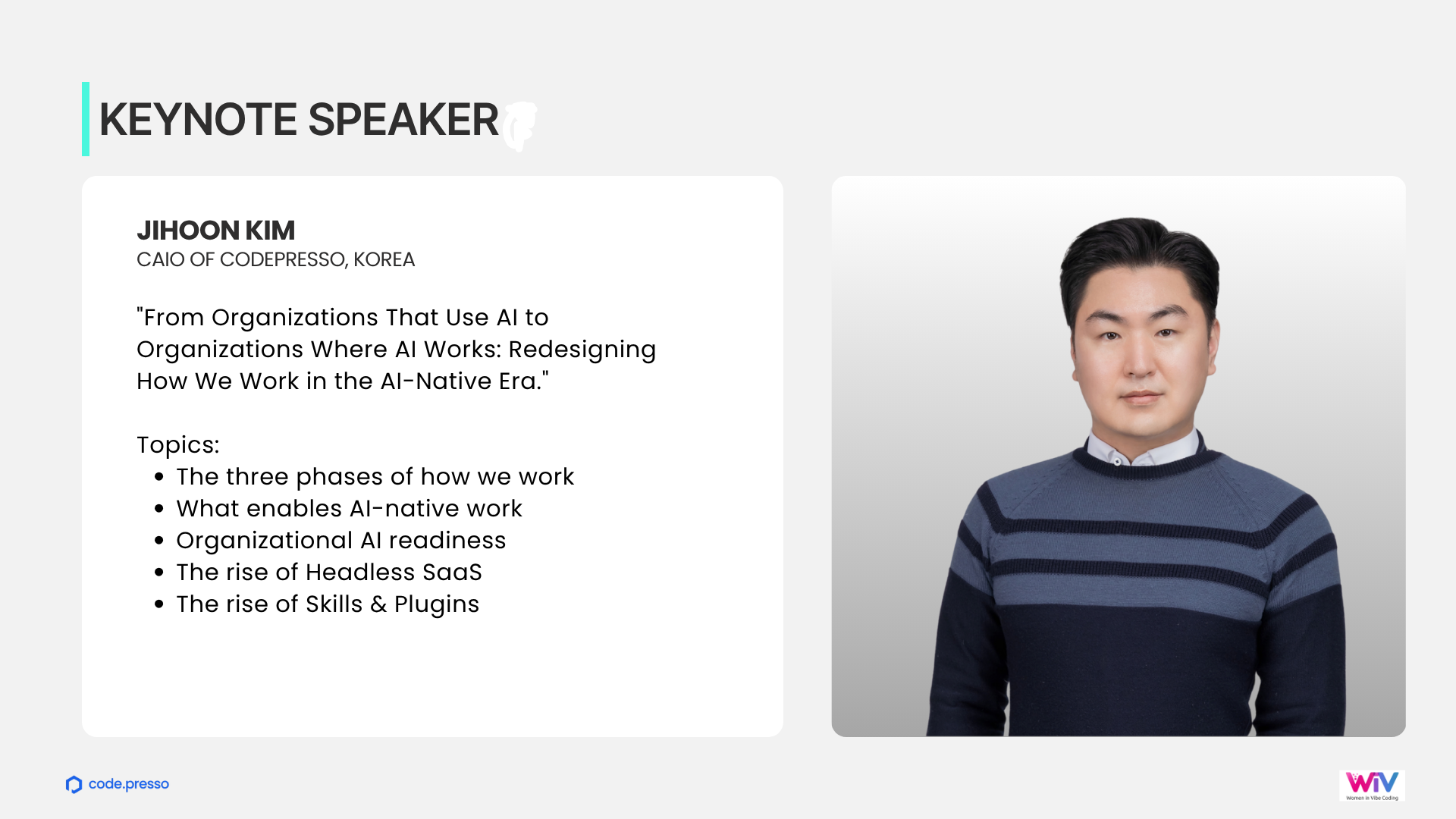
Speaker: Jihoon Kim _ CTO and Head of AI R&D Team at Codepresso
Jihoon Kim explored what AI transformation looks like inside modern organizations.
Rather than measuring success by the number of AI tools employees use, organizations should ask a more important question:
Does AI actually perform meaningful work inside the organization?
His presentation described three stages of organizational AI maturity:
- Organizations that experiment with AI
- Organizations that achieve individual productivity gains
- Organizations where AI agents operate within governed business workflows
As AI agents become more capable, organizations must build governance, technical controls, and human oversight alongside them. AI should extend an organization's operational capabilities, not create unmanaged risks.
Jihoon also introduced the concept of the agentic loop, where AI continuously plans, executes, verifies results, and uses external tools to accomplish real business tasks. He emphasized that organizational maturity, not AI capability alone, determines whether AI creates sustainable business value.
His message aligned closely with the other speakers:
Successful AI transformation is not just about smarter technology. It is about redesigning how people, processes, and AI work together.

Common Themes Across All Three Sessions
Although each speaker approached AI from a different perspective, several key ideas consistently emerged:
- AI should enhance human capability, not replace human judgment.
- Responsible AI requires governance, ethics, and accountability.
- Critical thinking becomes more valuable, not less, in the AI era.
- Organizations need cultural transformation alongside technological adoption.
- Future-ready professionals are those who can collaborate effectively with AI.
Together, these insights reinforce an important reality: AI readiness is no longer a technical challenge alone, it is an organizational, educational, and leadership challenge.
Thank You to Our Global Community
We sincerely thank our three outstanding speakers for sharing their expertise and practical experiences:
- Kristel Weinreich (Luxembourg)
- Jihoon Kim (Codepresso, Korea)
- Assoc. Prof. Thanh Tho Quan (HCMUT, Vietnam)
We are equally grateful to everyone who joined us live from around the world.
The engagement during the webinar was inspiring, with participants asking thoughtful questions and sharing positive feedback, including:
"The webinar today is very useful."
Many attendees also requested presentation materials and expressed interest in future AI learning opportunities, highlighting the growing demand for practical guidance on responsible AI adoption.
Looking Ahead
AI is evolving rapidly, but one message from the webinar stands above all:
The future belongs not to those who simply use AI, but to those who know how to work, learn, and lead alongside it.
At Codepresso, we remain committed to helping individuals and organizations build practical AI capabilities through assessment, education, and hands-on experience.
Stay tuned for more webinars, workshops, and learning opportunities as we continue exploring the future of AI together.