Public-Sector AI Training: From AI Skills to Workflow Automation

The BIPA AX Grow Case Study
|
One-Minute Summary 💡 |
Public-sector AI training cannot be reduced to a single, fixed curriculum. At the Busan IT Industry Promotion Agency (BIPA), each program was designed differently to reflect the agency’s administrative workflows and the needs of local industries. AXMOS developed two distinct programs: administrative workflow automation training for BIPA employees and AI-powered video production training for professionals at local content companies. These initiatives were complemented by a memorandum of understanding among Codepresso, BIPA, and the Busan Venture Business Association to help build a regional AI transformation (AX) ecosystem. For BIPA employees, the program focused on building and deploying a support program inquiry portal without writing code. For local industry professionals, it centered on producing promotional videos with AI. An overview of the broader program structure is available in the AX Grow program guide . |
AI for Public-Sector Workflows
Simplifying Document Management and Repetitive Tasks
The Busan IT Industry Promotion Agency (BIPA) is a public institution that plans, announces, and operates numerous support programs to advance Busan’s information technology, content, AI, and digital transformation industries.
Program planning professionals manage program announcements, project plans, budgets, and performance reporting. Support program production teams create program guides, promotional materials, instructions, and video content. Marketing teams promote recruitment, manage communication channels, prepare press releases, and document participating-company success stories.
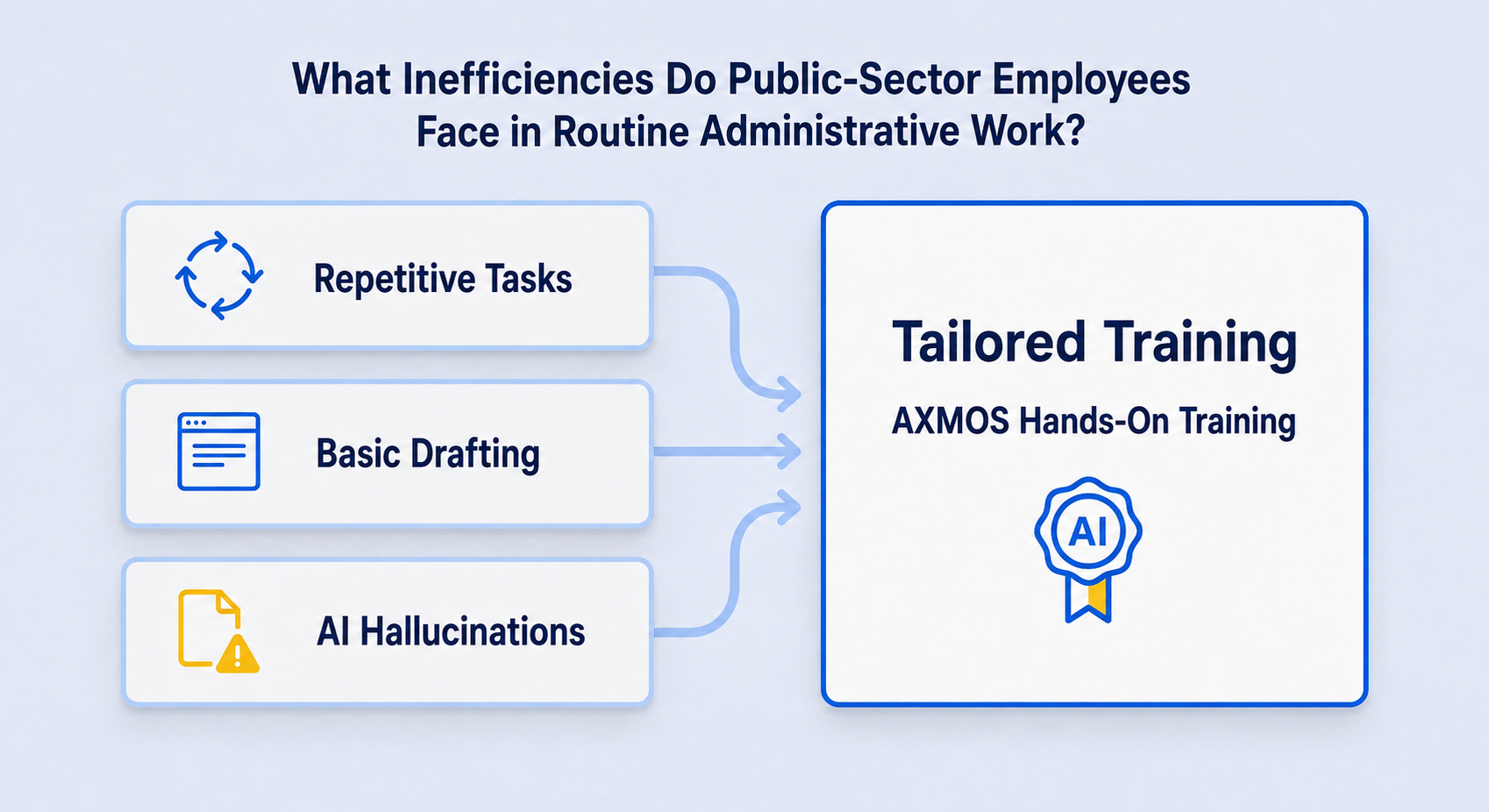
Despite their different responsibilities, these three roles face similar challenges. The same questions arise during every application period. Guides and promotional content are repeatedly created from scratch, while application and funding data remain scattered across multiple systems and documents.
These workflows, defined by repetitive tasks, document-heavy processes, and fragmented information, became the starting point for the customized AI training program that AXMOS designed with BIPA.
AI Training for Non-Developers
Build and Deploy an AI-Powered Portal in Two Days
The program conducted in May 2026 focused on building a support program inquiry portal. Participants were non-developer professionals working in program planning, support program production, and support program marketing. No prior coding experience was required.
The course was delivered over two days. On the first day, participants learned the fundamentals of generative AI and large language models (LLMs), prompt engineering, context management, and AI agents.
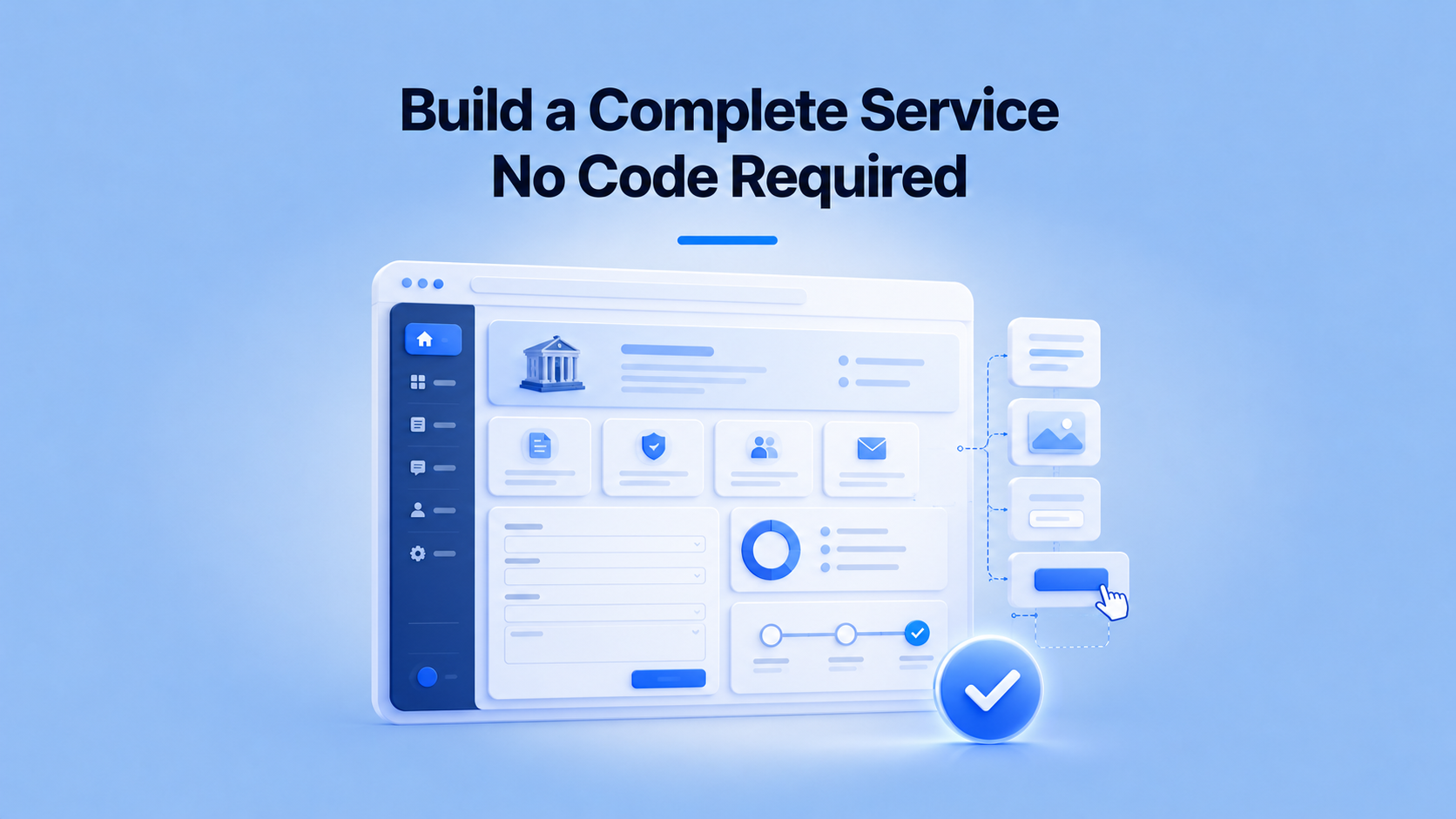
The second day focused on hands-on application. Participants began by creating the portal’s initial interface with a single paragraph written in natural language. They then prepared a mini product requirements document (PRD) and added administrative functions, inquiry categories, and processing statuses.
Next, they integrated an AI-powered draft-generation feature into the administrator interface. Finally, they used GitHub and a deployment platform to publish the service at a live web address. The course was intentionally structured so that employees who had never written a line of code could have a functioning deployment URL by the afternoon of the second day.
Each of the three professional groups approached the hands-on project from a different operational perspective.
The change introduced by this training was straightforward. Previously, employees wrote every program announcement and guide from a blank page while responding individually to inquiries by email and phone. After the training, they could begin by giving AI a goal such as:
“Create a portal that organizes inquiries about this support program by category and processing status.”
Employees could then focus their attention on verifying the accuracy of critical information, including funding amounts and eligibility requirements, and ensuring compliance with applicable rules.
AI Agent Training for Content Creators
From Production Brief to Finished Video
Another AXMOS-designed program served a different audience. The AI agent, based Vibe Coding course for video content production, held at the Creative Hall of Busan Kyungsang College from August 3 to 7, 2026, was hosted by BIPA.
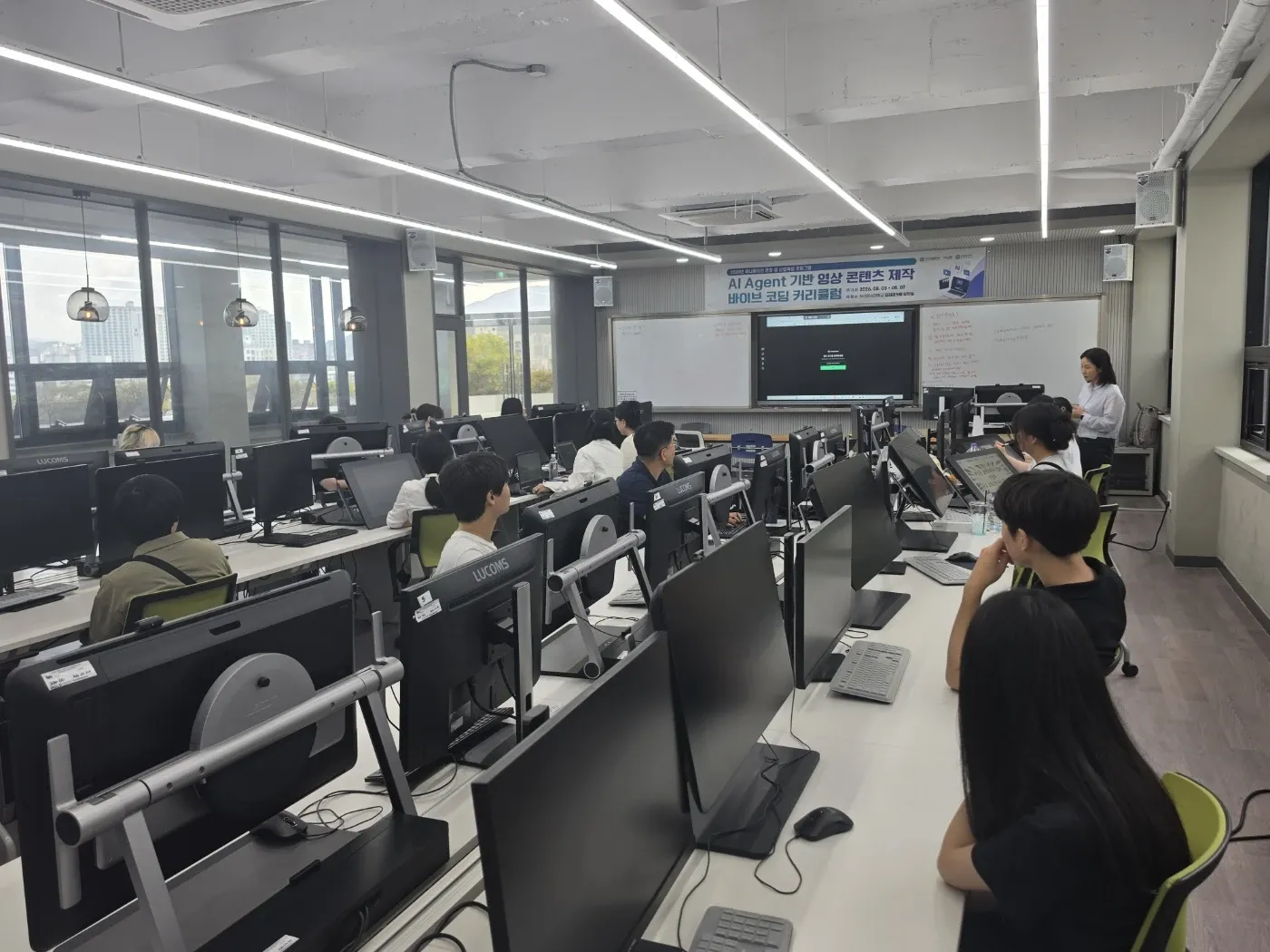
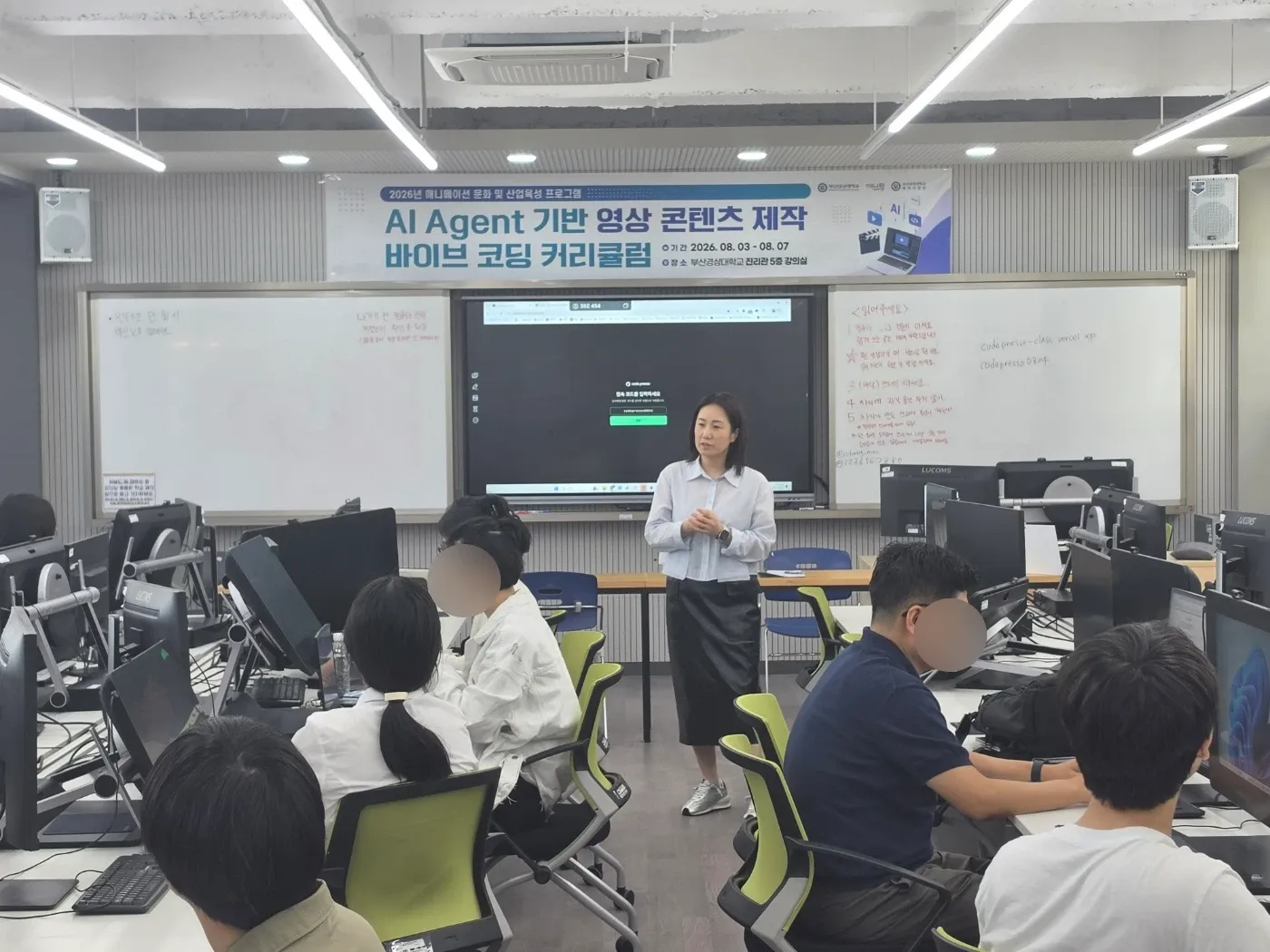
Rather than BIPA employees, the participants were approximately 20 professionals from Busan-based content companies, including Content Core and Maru Visual Tech.
The program also had a different objective. Participants learned how to delegate video production to AI without relying on conventional filming and editing processes. Instead of focusing on the technical operation of video editing software, the course taught participants how to communicate their intended output through a product requirements document (PRD) and a set of production rules, or Skills.
Participants then reviewed, revised, and re-rendered the AI-generated results. The emphasis was on developing the role of a creative director who can clearly guide and supervise AI-powered production.
The program consisted of four days of instruction followed by one day of presentations.
The curriculum illustrated how several video production workflows could change before and after AI adoption.
Commenting on the program, AXMOS CEO Hee-deok Park said that AI in the video content industry is moving beyond simply accelerating production and is changing the way content itself is created.
Busan AI Transformation Partnership
Advancing R&D and Workforce Development
The collaboration with BIPA was not limited to individual training programs.
On June 26, 2026, Codepresso, the Busan IT Industry Promotion Agency, and the Busan Venture Business Association signed a memorandum of understanding to accelerate AI transformation across the Busan region.
The agreement covered four areas, ranging from joint research and development to the cultivation of regional AX talent. The AI video production course held in August under BIPA’s leadership was also part of this broader collaboration. More information about the consortium’s scope of activities is available in the AXMOS consortium overview.
At the signing ceremony, Codepresso CEO Donghoon Lee explained:
“AI transformation is not simply about replacing tools. It is about reorganizing how an organization works around AI, and that transformation begins with the AI capabilities of each individual employee.”
Customized Public-Sector AI Training for Employees and Industry Professionals
The work with the Busan IT Industry Promotion Agency demonstrates that public-sector AI training does not need to follow a fixed curriculum. It can be adapted to the institution, target audience, and industry involved.
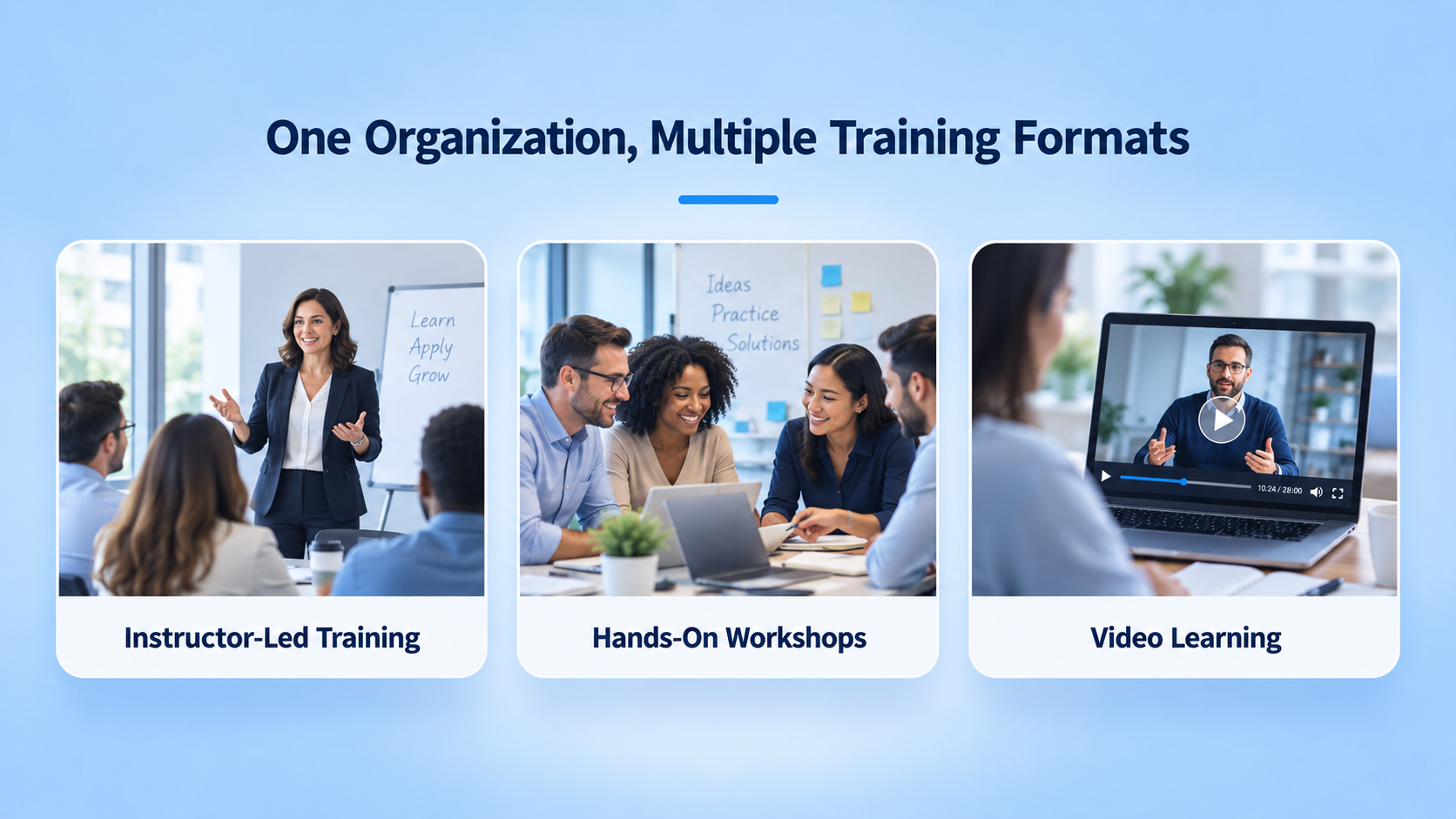
Even under the same BIPA initiative, each program took a different form. One helped internal employees turn repetitive administrative workflows into practical AI-powered tools. Another delivered industry-specific AI training to professionals at local content companies. A third initiative established a collaborative framework among regional institutions.
Together, these efforts show that AI training for public institutions can extend far beyond a single employee onboarding program. It can support internal workflow automation, industry-specific capability building, and the development of a broader regional AI transformation ecosystem.
Frequently Asked Questions (FAQ)
Can public institutions implement this type of AX training?
Yes. As the BIPA case demonstrates, programs can be designed both for public-sector employees who want to automate repetitive administrative work and for professionals in local industries who need specialized AI training.
The appropriate program format can be determined based on the institution’s operational needs, participants, and AI transformation goals.
How does training for public-sector employees differ from training for local industry professionals?
The target audience and practical subject matter are different.
Programs for public-sector employees focus on internal workflows, such as managing support program inquiries and preparing program announcements. Programs for local business professionals focus on workflows specific to their industry, such as video content production.
Although both programs apply similar AI methods, they address different operational challenges and produce different outcomes.
Can the hands-on exercises be customized to our institution’s workflows?
Yes. In the BIPA programs, the exercises were based on actual operational needs, including responding to support program inquiries, preparing announcements, and producing video content.
The specific workflows used in the training are selected through advance consultation with the relevant department.