AI Agents Can Work 24/7. Does Your Team Know How to Delegate to Them?


With the announcements of OpenAI Dots and Meta Muse, AI is moving beyond answering questions. It is beginning to take on work, operate across business systems, and continue working even when employees are away.
For organizations, this shift raises an important question: Does your team know how to delegate work to AI agents effectively and responsibly?
As AI agents become more autonomous, employees will need more than strong prompting skills. They will need the ability to define goals, set boundaries, assign permissions, establish approval points, and evaluate results.
Here are five questions organizations can use to assess whether their teams are ready for the age of autonomous AI agents.
|
One-Minute Summary 💡 |
On September 29, 2026, OpenAI announced Dots, an AI agent designed to work continuously from a dedicated cloud computer. Meta also introduced Muse for Small Business, extending its AI agent capabilities to small and midsize businesses. These products signal an important change in how employees may work with AI.
Until now:
Employee asks → AI answers → employee uses the answer.
Emerging model:
Employee delegates → AI executes across systems → employee reviews and approves. Both OpenAI and Meta have built human approval mechanisms into sensitive actions. But the technology cannot decide by itself which tasks should be delegated, where human approval is required, or what level of access is appropriate. Those decisions still belong to people. That is why the next critical AI skill for employees will not simply be better prompting. It will be AI delegation capability: the ability to assign work to AI, supervise execution, and remain accountable for the outcome. |
Imagine telling an AI agent before leaving work:
“By tomorrow morning, organize this week’s customer inquiries and prepare draft responses for each one.”
Until recently, that may have sounded like a future scenario. Now it is becoming a real product experience.
The latest announcements from OpenAI and Meta show that AI is evolving from a tool employees consult into something much closer to a digital coworker, one that can operate across applications, execute tasks, and continue working in the background.
In this article, we look at what these developments mean for organizations and why AI delegation skills are becoming a core part of enterprise AI readiness.
What Changed With OpenAI Dots and Meta Muse?
OpenAI Dots gives each AI agent access to a dedicated cloud computer and browser, allowing it to work continuously toward a user-defined objective. According to OpenAI, Dots can connect with more than 4,000 applications, and users can assign work through tools such as ChatGPT, Slack, and Microsoft Teams.
Meta Muse for Small Business expands Meta’s personal AI agent, Muse, into business workflows for small and midsize companies. It can connect with workplace tools such as Asana, Slack, Shopify, and Notion, as well as Meta advertising accounts and Instagram and Facebook business accounts.
| Category | OpenAI Dots | Meta Muse for Small Business |
|---|---|---|
| What it does | Works continuously toward a goal using a dedicated cloud computer | Connects business tools and advertising accounts to support business operations |
| Where work is assigned | ChatGPT, Slack, Teams | Muse app and connected business tools |
| Human oversight | Users can define allowed actions, approval-required actions, and blocked actions | Requires confirmation before sensitive actions such as sending emails or making purchases |
| Availability in Korea as of Sept. 30, 2026 | Availability varies by plan and region | Available in the U.S. and Canada |
The larger shift is more important than either individual product.
Today, employees usually ask AI a question and manually move the answer into another system. With AI agents, employees increasingly define the task, allow the AI to operate across multiple systems, and then review or approve what it has done. That changes the employee’s role from AI user to AI delegator and supervisor.
Both Companies Are Emphasizing the Same Thing: Human Approval
One of the most notable similarities between OpenAI and Meta is their emphasis on human oversight.
Meta states that Muse asks users for confirmation before carrying out sensitive actions such as sending emails or completing purchases. It also provides a record of completed and planned actions.
OpenAI similarly restricts certain autonomous activity while the user is away and allows users to define which actions can proceed automatically and which require approval.
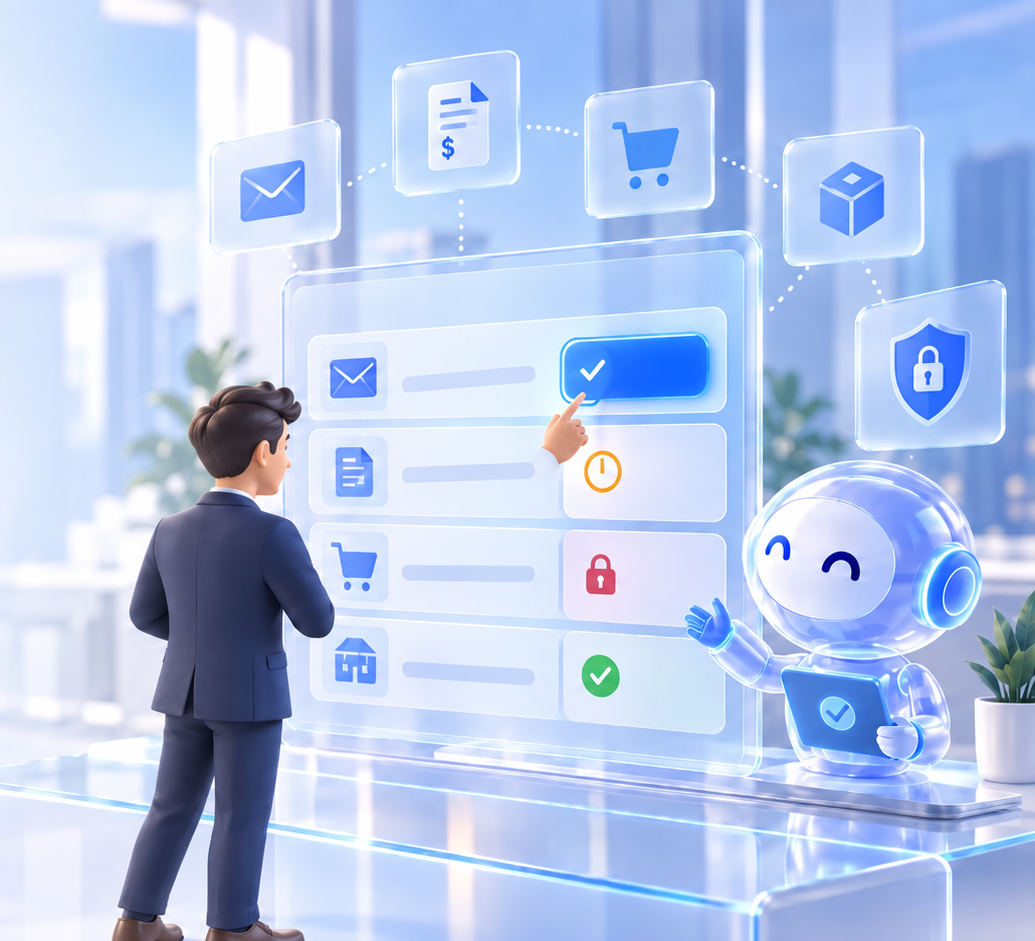
This is important because an AI agent should not have unlimited authority simply because it can technically perform a task. But the platform cannot determine every approval rule for your organization. Consider a few examples:
- Can an AI agent check inventory without approval?
- Who should approve a customer quote before it is sent?
- Should an agent be allowed to create a purchase order?
- Can it draft a customer email but not send it?
- At what point should an employee intervene?
The people who understand the business process must make these decisions. As AI systems become more capable, employees who understand how to set these boundaries become even more valuable.
The Key Skill Is No Longer Just Prompting. It Is AI Delegation.
At Codepresso, we see delegation capability as one of the most important workforce skills in the AI agent era.
Prompting focuses primarily on getting a better response from AI. Delegation goes much further. It means being able to assign work to an AI system while defining the objective, completion criteria, permissions, approval points, and validation process, and ultimately taking responsibility for the result.
| Category | Asking AI | Delegating to AI |
|---|---|---|
| What the employee provides | Question or prompt | Goal, completion criteria, and permissions |
| Core skill | Designing better prompts | Designing and structuring the work itself |
| Human review | Immediately after receiving an answer | Before irreversible or high-risk actions |
| Cost of error | Incorrect answer can often be discarded | Incorrect emails, purchases, or system changes may remain |
| What strong performers do | Refine questions effectively | Know what should and should not be delegated |
This difference becomes increasingly important as AI agents operate for longer periods without direct human supervision.
Codepresso and AXMOS have already incorporated this idea into practical AI transformation programs.
For example, in our AI agent onboarding program with the Seoul Center for Creative Economy & Innovation, many participants were already familiar with generative AI. The challenge was not introducing AI itself.
The challenge was helping employees move from asking AI for help to delegating real work to AI.
Is Your Team Ready to Delegate Work to AI?
Ask These 5 Questions.
Before introducing autonomous AI agents into everyday operations, evaluate whether employees can answer the following five questions.
If your team struggles with three or more of them, workforce readiness may be a more urgent priority than purchasing another AI tool.
1. Can Employees Define the Goal and the Definition of Done?
“Organize customer emails” is not enough.
A more effective delegation might be: “Classify customer inquiries by product, prepare a response draft for each inquiry, and assign it to the appropriate account owner.”
The AI agent needs to know not only what to do, but also when the work is considered complete. This is one of the foundations of effective AI task delegation.
2. Can Employees Identify Actions That Are Difficult to Reverse?
Certain actions require more caution because the consequences cannot easily be undone.
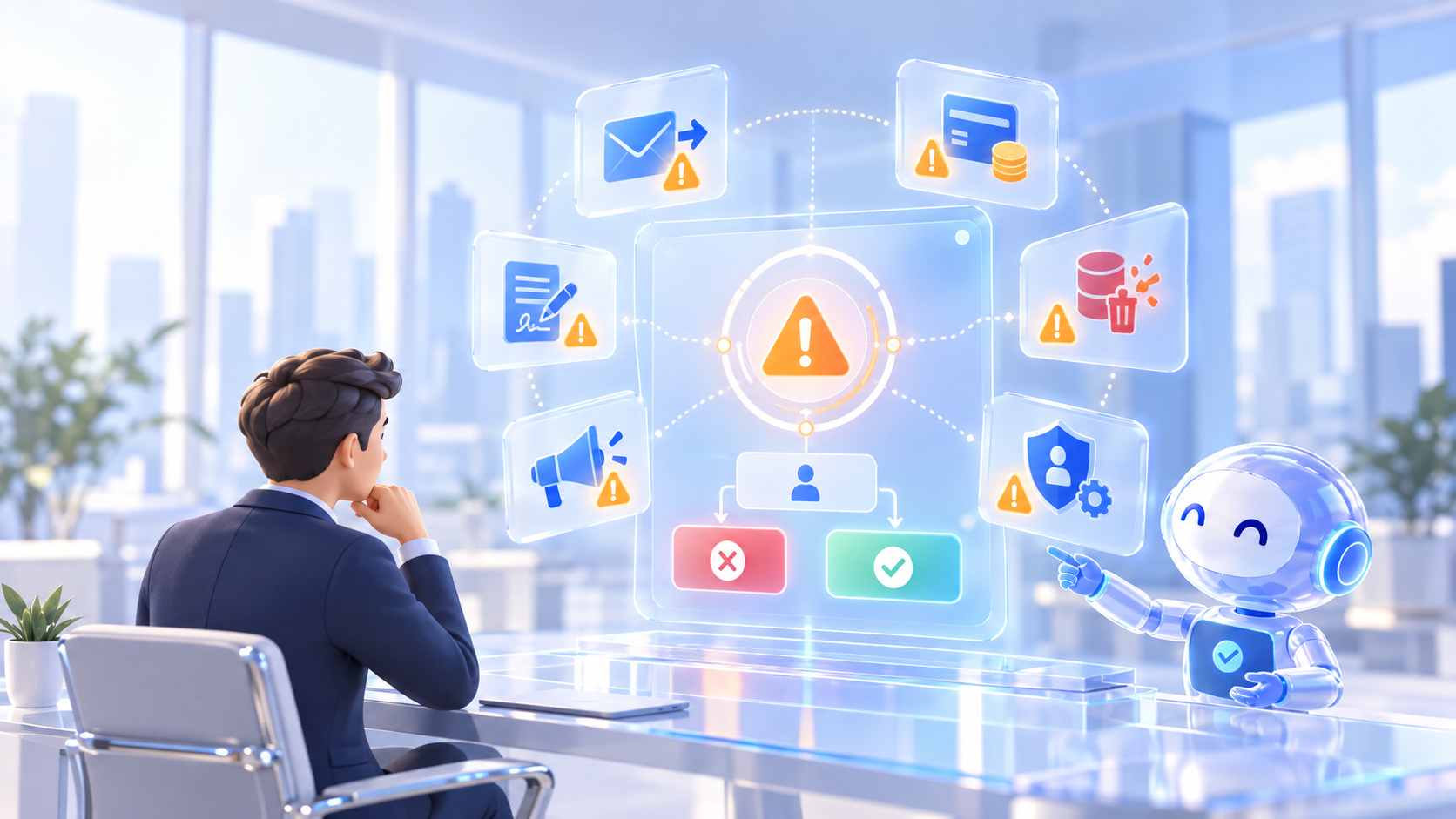
Examples include:
- Sending an external email
- Making a payment
- Approving or signing a contract
- Deleting data
- Publishing content
- Changing system permissions
These steps should usually include a human approval checkpoint. Employees need to understand where those checkpoints belong before an AI agent is given operational authority.
3. Can Employees Separate Read Access From Write Access?
AI agents should receive only the permissions required to complete their tasks.
For example: An agent may be allowed to read a mailbox and pricing database, while employees retain control over actually sending the message.
This principle of least privilege is already fundamental in enterprise security. It becomes even more important as AI agents interact with business systems autonomously.
4. Does the Team Have Clear Criteria for Validating AI Output?
An AI agent completing a task is not the same as an AI agent completing the task correctly. Organizations need clear validation standards. Employees should know:
- What should be reviewed
- Which errors are unacceptable
- What signals indicate abnormal behavior
- When the agent should stop
- When a human should take over
Without validation criteria, automation can simply scale mistakes faster.
5. Can You Measure the Business Impact?
AI agent adoption should be evaluated with measurable outcomes.

Useful metrics may include:
- Task completion time
- Number of cases processed
- Human correction rate
- Error rate
- Approval frequency
- Cost per task
- Productivity improvement
Without baseline metrics, organizations cannot determine whether an AI workflow is actually improving performance.
AI Agent Readiness Is a Workforce Issue, Not Just a Technology Issue
Organizations often begin AI transformation by comparing models, platforms, and software licenses.
Those decisions matter. But AI agents create a different challenge. Even if the technology is available immediately, the organizational capability to use it effectively cannot be created overnight. Employees must learn how to:
- Break down work
- Define completion criteria
- Set permission boundaries
- Design human-in-the-loop approval steps
- Validate AI outputs
- Measure performance
This is why AI workforce readiness is quickly becoming as important as AI infrastructure itself.
A 2025 survey of 504 Korean manufacturing companies conducted by the Korea Chamber of Commerce and Industry found that 80.7% reported not having specialized personnel for AI adoption.
The implication is clear. For many companies, the AI talent and capability gap may be a larger barrier than access to AI technology.
How Can Organizations Measure and Develop AI Delegation Skills?
Delegation capability is difficult to measure through course completion certificates or satisfaction surveys. Organizations need to observe how employees actually work with AI in realistic business scenarios.
For example:
- How clearly did the employee define the problem?
- What instructions did they give the AI?
- Did they set appropriate permissions?
- Did they recognize when human approval was necessary?
- How did they validate intermediate outputs?
- How did they correct mistakes?
- Was the final result usable?
These behaviors reveal much more about practical AI capability than whether someone attended a training session.
Measure Practical AI Capability With Codepresso AI Fluent
Codepresso AI Fluent is an AI competency assessment solution designed to evaluate how employees actually work with AI. Rather than measuring knowledge alone, AI Fluent analyzes the process employees use to solve realistic tasks.
The AI Agent - Based Work Efficiency track evaluates an employee’s ability to design and operate AI-agent workflows, from defining the problem to configuring tools and skills. It is designed as a shared assessment track for both technical and non-technical employees.
The assessment examines multiple signals, including:
- Prompt and interaction history
- Intermediate work products
- Final deliverables
- Problem-solving process
Results are categorized into four proficiency levels: Entry → Beginner → Intermediate → Professional
This gives organizations a practical way to understand where employees are today and where additional training is required.

From AI Assessment to Workforce Transformation
Assessment should not be the end of an AI capability program. It should be the starting point.
A stronger enterprise AI development cycle looks like this: Assess → Identify capability gaps → Train → Apply to real work → Reassess
Organizations can use AI competency assessment data to identify specific weaknesses, deliver targeted training, and then evaluate whether performance actually improves.
For organizations pursuing broader AI transformation, Codepresso also works with AXMOS through the AX Grow program, connecting assessment, practical training, and AI adoption within real business workflows.
The goal is not simply to help employees use AI more often. It is to help them use AI responsibly, effectively, and measurably.
Frequently Asked Questions
Can OpenAI Dots and Meta Muse Be Used in Korea Today?
As of September 30, 2026, Meta Muse is available in the United States and Canada and is not yet generally available in Korea.
OpenAI Dots availability varies by plan and region. According to OpenAI, availability for Pro users excludes certain regions, while Business Premium and Enterprise access is being rolled out more broadly.
Workspace administrators may also need to enable the feature for organizational accounts.
How Are AI Delegation Skills Different From Prompt Engineering?
Prompt engineering focuses on generating a better response from AI.
AI delegation skills include a broader set of capabilities:
- Defining the objective
- Establishing completion criteria
- Setting system permissions
- Identifying human approval points
- Monitoring execution
- Validating results
- Taking accountability for the final outcome
As AI agents become more autonomous, these capabilities increasingly determine whether AI improves or disrupts business operations.
Can Non-Developers Build AI Delegation Skills?
Yes.
In many cases, employees who understand the business process are better positioned to design appropriate delegation rules than software developers.
Defining the business objective, identifying irreversible actions, setting approval points, and evaluating output quality do not necessarily require coding expertise.
That is why Codepresso AI Fluent’s AI Agent–Based Work Efficiency track is designed for both technical and non-technical professionals.
How Can We Assess Our Team’s AI Delegation Capability?
The most reliable approach is to observe employees working with AI in realistic business scenarios rather than relying on self-assessment.
Codepresso AI Fluent evaluates prompt history, intermediate outputs, working processes, and final results.
Organizations can then identify capability levels ranging from Entry to Professional and use the results to guide AI training and workforce development.
References
- OpenAI, “Introducing Dots,” September 29, 2026
- OpenAI, Dots Help Documentation
- Meta, “Introducing Muse for Small Business,” September 29, 2026
- Meta, “Introducing Muse,” September 2026
- Korea Chamber of Commerce and Industry, “K-Growth Series (7): Current State of Enterprise AI Transformation and Recommendations,” November 19, 2025